Eli Lilly recently released a 60-second film called A Life Covered. You may have seen it during America's Got Talent or MLB coverage. You'll see it during the Emmy Awards in September. It's running as a centerspread in the Sunday editions of the New York Times and the Wall Street Journal. It's on LinkNYC kiosks in Midtown Manhattan.
It's a pharmaceutical advertisement. And it's one of the most human pieces of brand content produced this year.
The film follows a 67-year-old woman as she reflects on a lifetime of thinking about her weight. It begins with her earliest memory — her mother taking food away from her when she was five. It moves through her wedding day, through New Year's Eve resolutions that never held, through aerobics videos in a living room that looks like 1985. It ends with her standing up from the couch and walking out the front door. The final text reads: Some people spend their entire lives fighting obesity. We fought to make obesity medicine accessible for them.
That's the entire film. No product shot. No clinical data. No animated molecule. No spokesperson in a white coat. Just a woman's face and sixty years of a private struggle made visible for the first time.
Wieden+Kennedy Portland made it. They hired Greg Kwedar and Clint Bentley to direct it — the filmmaking duo behind Sing Sing and Train Dreams, both independent narrative films with deep documentary roots. This is the detail that explains everything. W+K didn't hire a commercial director. They hired people who know how to find truth in a human face and stay out of the way of it.
The result is a piece of content that earns attention rather than interrupting for it. People are not scrolling past this film. They are watching it and feeling something — which is the only metric that ultimately matters, and the one most brand content never achieves.
Lilly's CMO described the creative brief this way: "These are people who have fought a very unfair fight against this disease for a long time, and we wanted to honor their fight." That sentence is the entire difference between a mission film and a brand video. One is built around what the company wants people to believe about the company. The other is built around what the company actually believes — and demonstrates it by pointing the camera at the human experience the company exists to serve.
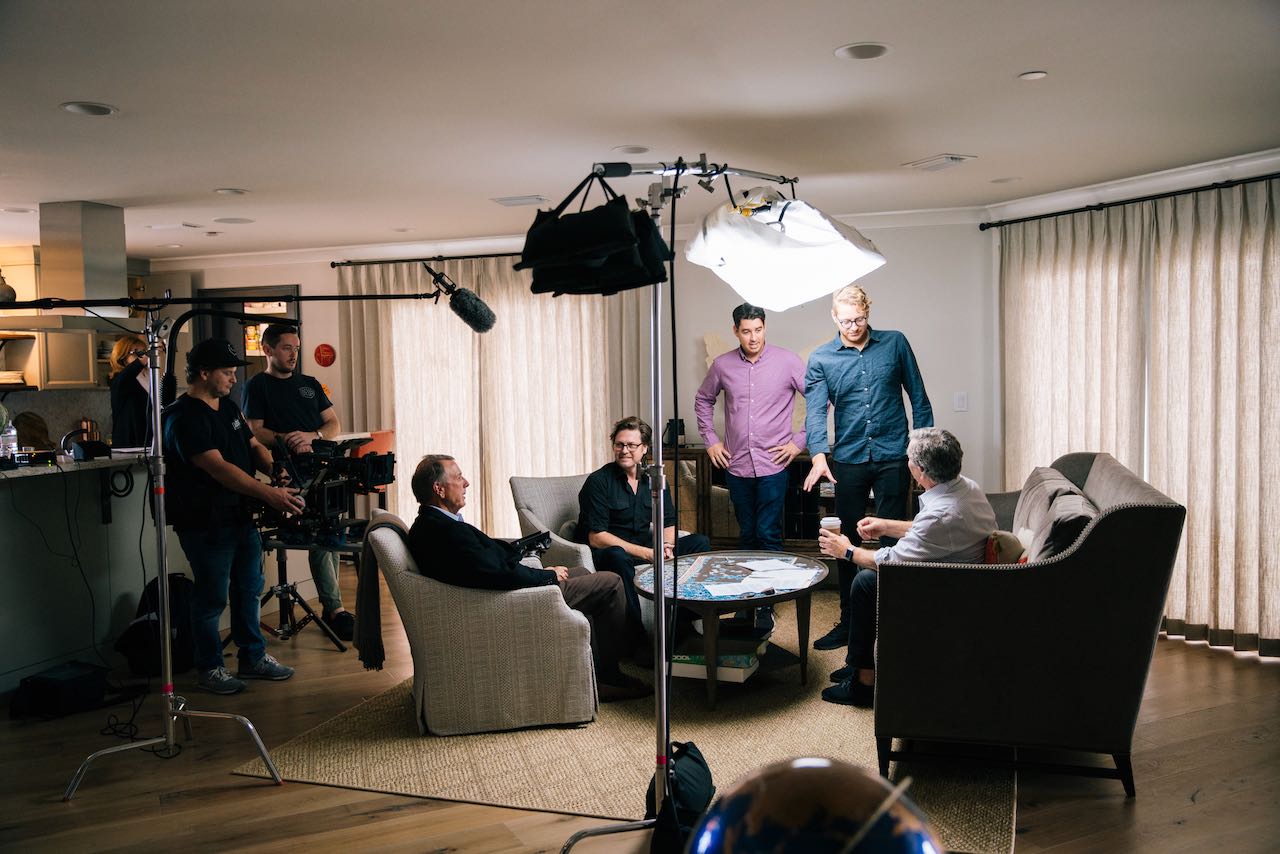
I've spent the last twenty years making films that attempt to do the same thing A Life Covered does — reach the person on the other end of the screen and reveal something true about their own experience. The scale has been different. What we called homepage documentaries at Drawing Lines Media Group, and what we call mission films at Can & String, have operated on budgets ranging from six figures to four. The principle doesn't change with the budget. Before the camera comes out, you have to know whose story you're actually telling and why it matters to the specific human being you want to reach. Everything else is execution.
Most brands never get there. Not because they lack the budget. Because they lack the intention.
The brands that do get there — the ones that commission work from people willing to spend real time inside an organization before pointing a camera at it, who craft questions instead of scripts, who identify the right voice rather than the most available one — those brands produce content that compounds over time. Content that travels without a media buy behind it. Content that makes the audience feel something, which is the only reason anyone shares anything.
A Life Covered will run on the Emmy Awards. It will run on streaming platforms and in major newspapers and on the sides of buildings in New York City. It has a media budget behind it that most brands will never have. But the reason it works has nothing to do with the media buy. A different film with the same budget, directed by someone who didn't understand what the story actually was, would have disappeared into the noise the day after it ran.
The budget bought the placement. The intention made the film worth placing.
That's what Lilly understood. That's what Wieden+Kennedy understood when they hired documentary filmmakers instead of commercial directors. And it's what we've believed since long before either of those names appeared in the same sentence.
You don't need a pharmaceutical budget to tell a story that makes people feel something. You need to know whose story you're telling, why it matters, and who's going to feel it in their chest when the camera finally points at the right person.
The rest is craft. And craft, unlike budget, can't be bought in bulk.
The Lilly film inspired me — not because of the budget or the media buy or the Emmy placement, but because someone in that creative chain cared enough about the woman watching at home to make a film that pulled her in rather than hit her over the head with a message. That 67-year-old woman isn't a target demographic. She's someone's aunt. Someone's mother. Someone's sister. The struggle with weight is real and raw for a lot of people — and most of them have never seen it honored on screen before. When the film found them, they felt it. Because it was specific enough to be true and true enough to be universal.
That's what I've been trying to do for twenty years — at a fraction of the scale, with a fraction of the resources, and with the same conviction that the person on the other end of the screen deserves to feel something real.
What I'm looking for now are the founders and organizations that care about that the same way I do. Not the ones with the biggest content budget. The ones who understand that the story they're telling says something about the people they're trying to reach — and who want to get that right.
Those are the people worth making films for. They're harder to find than clients. But they make better work.