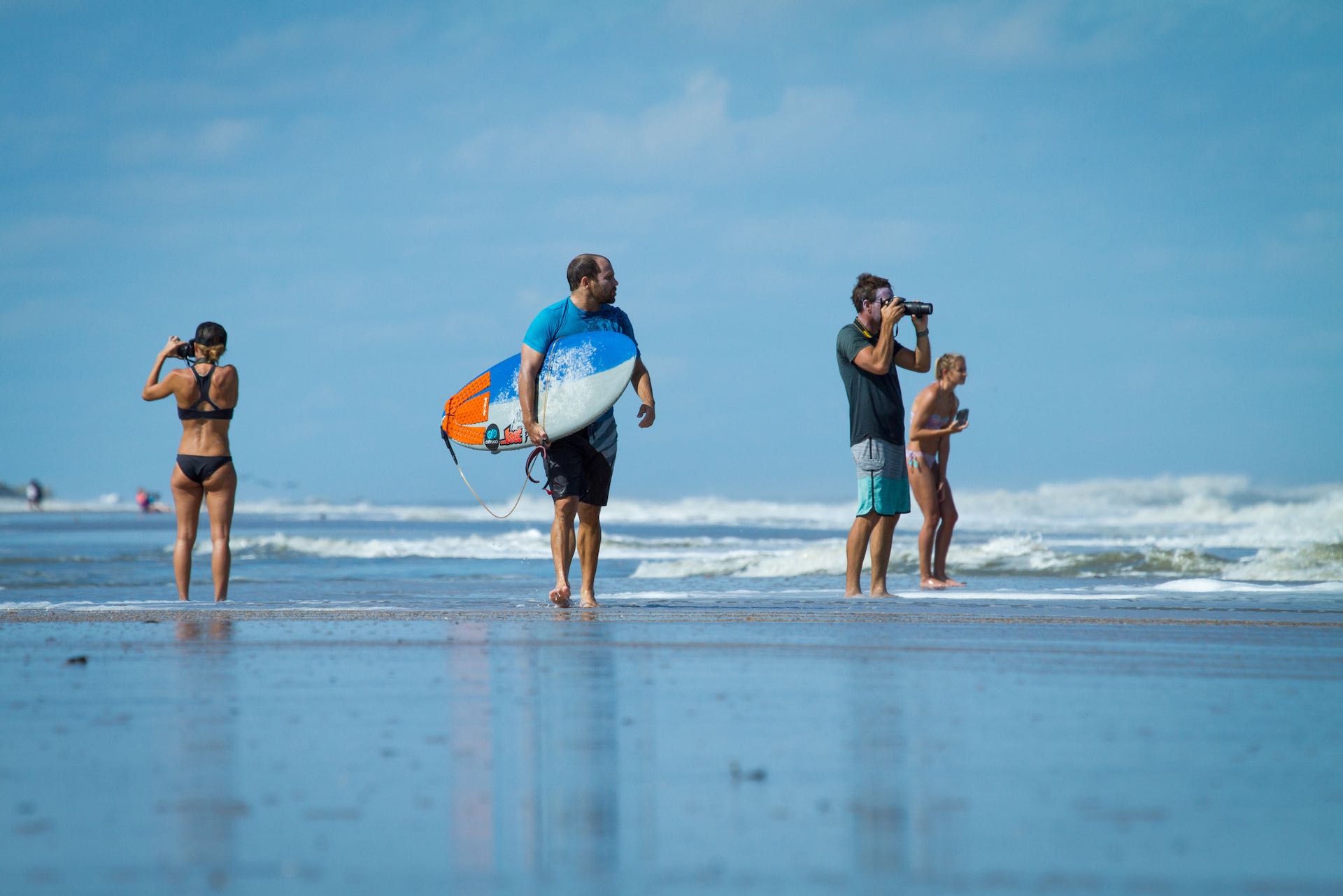
Ryan Hammers was one of the surfers in the first film I ever made. We shot Drawing Lines in 2004, a surf documentary produced with my partner Josh Bolton, built on borrowed time and whatever gear we could get our hands on. Ryan was young, talented, and completely at home in front of a camera. We were all just kids figuring out what we were doing.
Eight years later, Ryan called me about his business.
He had started Impact Enclosures, a company building high-end outdoor enclosures, summer kitchens, and pergolas in Jacksonville, Florida. The work was genuinely exceptional. They were already landing six-figure projects, and Ryan and his partner Justin McCullers were doing work that could hold its own against anyone in the region.
And they were losing leads because of how they came across in person.
The problem wasn't the product. It was perception. When potential customers met Ryan and Justin face to face, some of them made a judgment. Young guys. Must be inexperienced. The work never got the chance to speak for itself. No amount of a better proposal or a redesigned website was going to solve that. The bias was happening in the room, not on paper.
Ryan had seen a short film about Bayliss Boatworks, a custom sportfishing yacht builder out of Wanchese, North Carolina, and something clicked. He sent it to me and said he wanted that. Not a commercial. Not a testimonial reel. Something that made you feel what it meant to be in the room where the work was being made.
That's a different ask than most businesses know how to make. Most of them would have called an ad agency and ended up with a 30-second spot. Ryan knew what he was looking at when he saw it, and he trusted that I did too.
We made the film.
Before a camera pointed anywhere, Ryan and I spent time together figuring out what needed to be captured. Site visits, ride alongs, immersing ourselves in how they actually worked. Ryan chose a genuinely happy customer for an interview, someone who could speak to the experience without being coached into it. We crafted the narrative around Ryan and Justin's own interviews, finding the thread that ran through everything they did and said. The process was collaborative in the way that good editorial work always is. I brought the distance and the structure, they brought the truth of what they'd built.
What the film did was close the perception gap. It wasn't long. It didn't list services or showcase every project in their portfolio. It showed the care that went into the craft, the people behind it, and what it felt like to be a part of something built to last. Salespeople started showing it to prospective customers on laptops and tablets during early conversations. Leads that had gone quiet started converting. The question of whether Ryan and Justin were experienced enough to be trusted stopped coming up.
That was 2012.
The film is still on their homepage.
I think about that a lot, not as a credential, but as a lesson I keep returning to when clients ask me how long a piece of content can work for them. The honest answer is: longer than you think, if it's built on something true. Trends don't age well. Formats change. Platforms come and go. But a film that finds the specific truth of a business, the thing only that business can claim, has a shelf life that no media buy can replicate.
There's something else worth naming here. Ryan could not have made that film about himself, and not just because he was too close to it. He was running a business. Managing employees, bidding projects, solving the daily problems that come with building something from the ground up. A founder's job is to run their business, not produce a film about it. Asking them to do both is asking them to do two full-time jobs, and we've never believed that's a reasonable ask. We honor the fact that Ryan's time and attention belonged to Impact Enclosures. Ours belonged to telling their story.
But proximity is its own problem too. When you've built something yourself, you lose the ability to see it the way a stranger does. You know every flaw, every near-miss, every decision that almost went the other way. That knowledge is invaluable for running the business. It is almost entirely useless for telling its story.
This is the thing no framework will solve. The founder who reads every book on business storytelling will still struggle to find the story in their own business, because finding it requires distance, and distance is the one thing proximity makes impossible. A third party is more of a structural necessity than a convenience.
What I brought to Impact Enclosures wasn't a camera or a crew. It was the ability to walk in without assumptions, watch what they actually did, and recognize the story they had stopped being able to see. The gap between what they were and what people believed them to be wasn't a marketing problem. It was a storytelling problem, and it had a specific answer that no amount of better photography or a redesigned website would have provided.
Ryan saw that answer in a film about a boat builder in North Carolina. He called someone he'd surfed with eight years earlier. The film we made is still doing its job on a homepage thirteen years later, and Impact Enclosures has closed several million dollars in business with it.