Docuseries Development & Original IP
Stories Meant for Sharing
Keeping humans in the loop
Most of what we make, we make for someone else.
We build platforms for hotel management companies, rebrand aggregate companies, produce films for energy clients. We're proud of all of it. But there's a category of work that sits apart from the client engagement — the work you make because the story won't leave you alone, because the subject deserves a film, because the craft demands to be used on something that isn't commissioned.
Stories Meant for Sharing is that work.
It began as a conceptual campaign — a name and a visual identity for what Can & String was always trying to do: find the stories that human beings actually want to pass to each other, and make them well enough that they travel. We launched a Kickstarter to fund the first wave of development. It didn't reach its goal. We kept going anyway, because the ideas were stronger than the funding outcome, and because the kind of stories we wanted to tell don't get less true when a campaign falls short.
Three original docuseries emerged. Each has a completed pilot episode. Each is wholly owned by Can & String. Each is ready to pitch to DMOs, legacy brands, streaming platforms, and distribution partners looking for content with genuine human depth.
Persons of Interest
POI is our flagship series. The premise is simple and deliberately unfashionable: shine the light on ethical entrepreneurs who put people before profit and positively impact the communities they operate in. Not the disruptors. Not the unicorns. The builders — the people whose businesses are inseparable from their values and whose communities are measurably better for their presence.
The pilot episode profiles Julian MacQueen — founder of Innisfree Hotels, one of the Gulf Coast's most significant hospitality companies, with a $1 billion asset portfolio, 3,600 hotel rooms, and a philosophy built on the conviction that hospitality is a way to change the world, one guest at a time.
MacQueen's story defies simple summary. A 15-year-old from Birmingham who hitchhiked the shores of Destin for a summer job and never left the industry. A man who founded a hotel company from room 201 of his first property in 1985 and built it into a Gulf Coast institution over four decades. A private pilot who flew his HondaJet around the world in what he called "Around the World in 80 Stays." A Bahá'í who left his company for three years to serve as general manager of the Bahá'í World Centre in Haifa, Israel — then came back. A leader whose operating philosophy — that work is worship if done in the service of mankind — is not a tagline but a lived practice visible in every aspect of how Innisfree operates.
This is not a business profile. It's a documentary portrait of a man whose entrepreneurial journey is inseparable from his spiritual one, and whose company is the physical expression of a set of beliefs most organizations only claim to hold. Persons of Interest was built for subjects like Julian MacQueen — and for the audience that recognizes the difference between a business story and a human one.
Filling the Frame
Filling the Frame is an insightful journey into the minds of image-makers — the photographers, filmmakers, and visual artists whose creative process is as interesting as the work they produce. The series follows its subjects through the moments of uncertainty, inspiration, and resolution that define the making of something real.
The pilot episode profiles Jesse Brantman — a photographer who uses his camera as a tool against self-doubt, constantly seeking the next connection and the next way to bridge gaps between cultures and experiences. Directed by Stew Plemmons, with series development and production by Can & String and branding by Tailored Creative, the pilot establishes the format: cinema vérité for organic activity scenes, two-camera interview setup, story carried by the subject in their own voice.
Filling the Frame is built for an audience with a genuine interest in the arts — people who want to understand how an image gets made, not just look at the result. It's the rare creative documentary that treats craft as a subject worthy of serious attention rather than a backdrop for personality.
Nourishment
Nourishment follows individuals who have found refuge in new places after escaping oppressive government regimes, war, unstable economies, or displacement events. Using the hero's journey storytelling model, each episode follows a protagonist as they navigate a new environment, find ways to thrive, and contribute something irreplaceable to their adopted community.
The pilot episode features Lany Phlong — a second-generation Cambodian whose family escaped the Khmer Rouge. After settling in New York and excelling in corporate America, Lany discovers a deep connection to cooking and through it a renewed link to her homeland and heritage. Created and directed by Carl Rosen and produced by Can & String, Nourishment is among the most timely series in the portfolio — a documentary built around displacement, resilience, and the transformative power of finding belonging, told through subjects whose stories are as specific as they are universal.
The brand behind the series
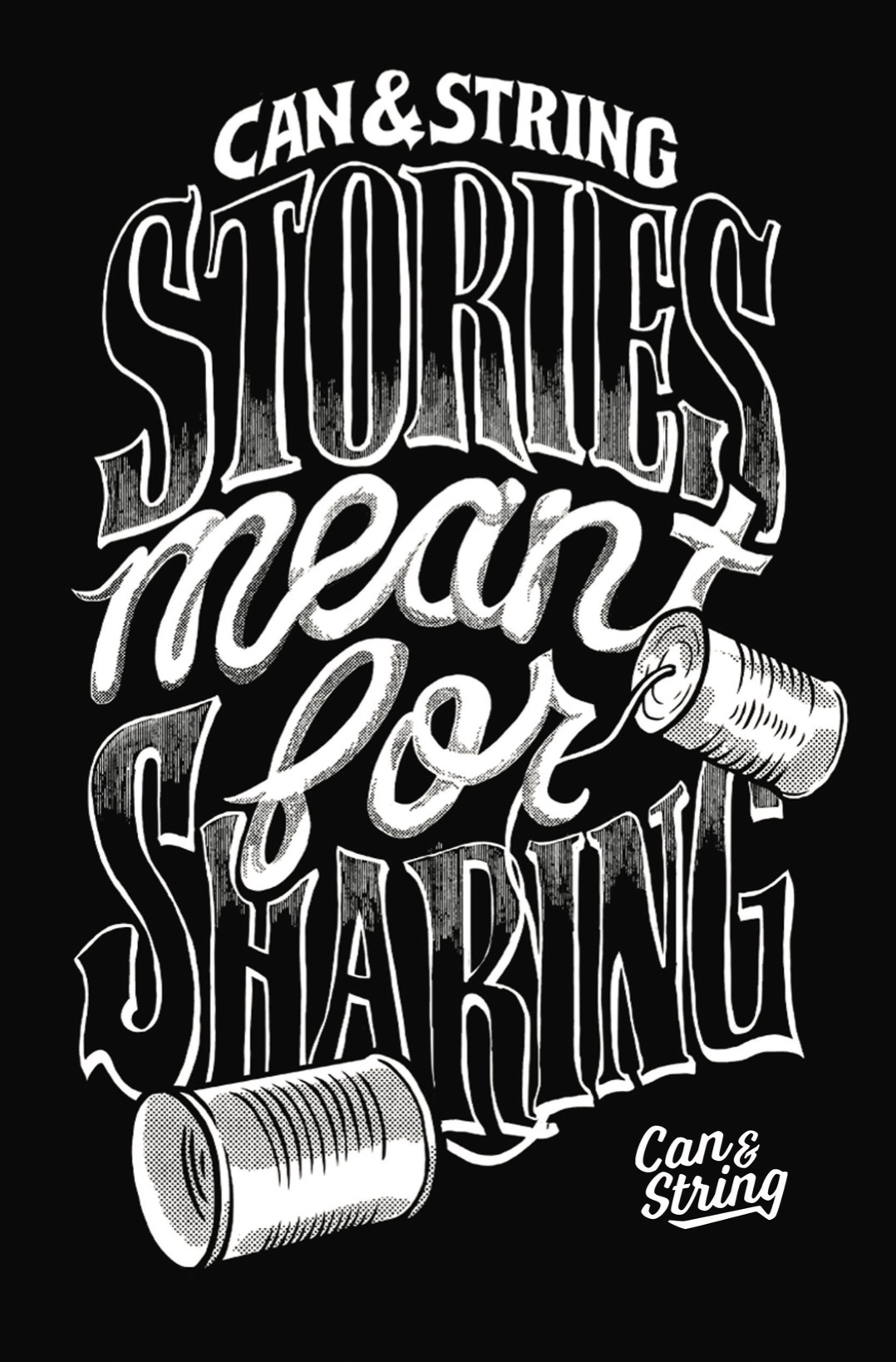
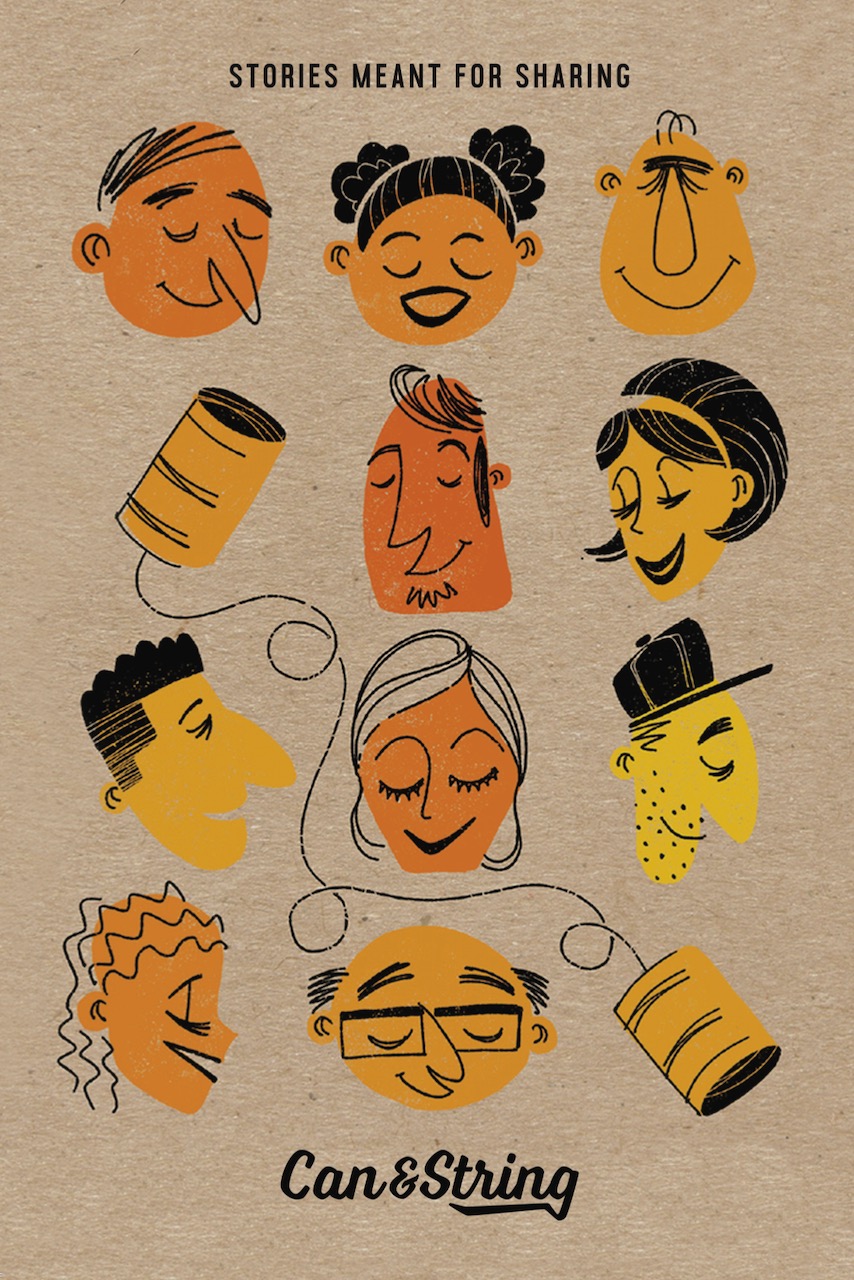
Stories Meant for Sharing was designed as more than a production slate — it was designed as a licensable identity. The visual language, developed with illustrators Tim Lenoir and Chad Landenberger, produced a set of campaign assets — hand-lettered posters, illustrated character systems, icon libraries — that give the umbrella brand the kind of distinct visual character that travels across merchandise, marketing, and platform branding. Each series within the slate has its own identity, its own target audience, and its own pitch position.
The documentary craft standard across all three series is consistent with everything Can & String produces for clients: real people, real environments, no manufactured emotion, stories carried by their subjects rather than imposed on them. The difference is that these stories belong to us.
The Kickstarter didn't fund. We kept going anyway. The stories were stronger than the outcome — and that, more than anything, is what these series are about